DC
Comics
History
History of DC Comics - Timeline - Historydraft
DC Comics History: Founding, Timeline, and Milestones
DC Comics, Inc. is an American comic book publisher. It is the publishing unit of DC Entertainment, a subsidiary of Warner Bros. since 1967. DC Comics is one of the largest and oldest American comic book companies and produces material featuring numerous culturally iconic heroic characters including: Batman, Superman, Wonder Woman, The Flash, Green Lantern, Aquaman, Shazam, Martian Manhunter, Nightwing, Green Arrow, Hawkman, Cyborg and Supergirl.
1934/ DC Comics Inc. Founded as National Comics Publications
Entrepreneur Major Macom Wheeler-Nicholson founded National Allied Publications
1935 / The earliest DC character introduced
Jerry Siegel and Joe Shuster, the future creators of Superman, created Doctor Occult, the earliest DC Comic character to still be in the DC Universe
1935 / The Big Comic Magazine
The company debuted with the tabloid-sized New Fun: The Big Comic Magazine #1 with a cover date 1935
1935 / New Comics
The company's second title, New Comics #1 (Dec. 1935), appeared in a size close to what would become comic books' standard during the period fans and historians call the Golden Age of Comic Books, with slightly larger dimensions than today's.
1937 / Wheeler- Nicholson takes Donenfeld as a partner
magazine distributor Harry Donenfeld, Wheeler-Nicholson had to take Donenfeld on as a partner in order to publish Detective Comics #1. From this partnership Detective Comics inc. was formed. Major Wheeler-Nicholson remained for a year, but cash-flow problems continued, and he was forced out. Detective Comics, Inc. purchased the remains of National Allied, also known as Nicholson Publishing, at a bankruptcy auction.
1937 / Detective Comics
Wheeler-Nicholson's third and final title, Detective Comics, premiered three months late with a March 1937 cover date though advertised with a cover illustration dated December 1936.
1938 / Action Comics
Detective Comics, Inc. soon launched a fourth title, Action Comics, the premiere of which introduced Superman. Action Comics #1 (June 1938) was the first comic book to feature the new character archetype known as "superheroes". With the success following action Comic #1 The company quickly introduced such other popular characters as the Sandman and Batman.
1939 / The introduction of Batman
The themed anthology series would become a sensation with the introduction of Batman in issue #27 (May 1939).
1940 / DC's first logo appeared
DC's first logo appeared on the April 1940 issues of its titles. The letters "DC" stood for Detective Comics. The small logo, with no background, read simply, "A DC Publication".
1941 / DC titles introduced and updated logo
The November 1941 DC titles introduced an updated logo. The name "Superman" was added to "A DC Publication", effectively acknowledging both Superman and Batman. This logo was the first to occupy the top-left corner of the cover, where the logo has usually resided since. The company now referred to itself in its advertising as "Superman-DC".
1946 / National Comics Publications
National Allied Publications merged with Detective Comics, Inc., forming National Comics Publications on September 30, 1946.
1946 / National Periodical Publications
National Comics Publications absorbed an affiliated concern, Max Gaines' and Liebowitz' All-American Publications. At that point, "Liebowitz promptly orchestrated the merger of All-American and Detective Comics into National Comics. he took charge of organizing National Comics, [the self-distributorship] Independent News, and their affiliated firms into a single corporate entity, National Periodical Publications".
1949 / The logo was modified to incorporate the company's formal name National Comics Publications
the logo was modified to incorporate the company's formal name, National Comics Publications. This logo would also serve as the round body of Johnny DC, DC's mascot in the 1960s.
1956 / Showcase
editorial director Irwin Donenfeld and publisher Liebowitz directed editor Julius Schwartz to produce a one-shot Flash story in the try-out title Showcase. Instead of reviving the old character, Schwartz had Robert Kanigher and John Broome, Carmine Infantino, and Joe Kubert create an entirely new super-speedster, updating and modernizing the Flash's civilian identity, costume, and origin with a science-fiction bent. The Flash's reimagining in Showcase No. 4 (October 1956) proved sufficiently popular that it soon led to a similar revamping of the Green Lantern character, the introduction of the modern all-star team Justice League of America (JLA), and many more superheroes, heralding the Silver Age of Comic Books.
1961 / National Periodical Publications became publicly traded on the stock market
National Periodical Publications became publicly traded on the stock market.
1966 / Batman TV show
Batman TV show on the ABC network sparked a temporary spike in comic book sales and a brief fad for superheroes.
1967 / National Periodical Publications was purchased by Kinney National Company
National Periodical Publications was purchased by Kinney National Company, which purchased Warner Bros. Kinney National spun off its non-entertainment assets in 1972 (as National Kinney Corporation) and changed its name to Warner Communications Inc.
1967 / Batman artist Infantino becomes DC's editorial director
Batman artist Infantino (who had designed popular Silver Age characters Batgirl and the Phantom Stranger) rose from art director to become DC's editorial director.
1970 / Jack Kirby moved from Marvel Comics to DC
Jack Kirby creator of Marvel’s Captain America, Fantastic Four, X-Men, Thor, Hulk, and Ironman moved from Marvel Comics to DC. Kirby created new concepts such as super villains, and universe expansions.
1970 / DC briefly retired the circular logo
DC briefly retired the circular logo in favor of a simple "DC" in a rectangle with the name of the title, or the star of the book; the logo on many issues of Action Comics, for example, read "DC Superman". An image of the lead character either appeared above or below the rectangle. For books that did not have a single star, such as anthologies like House of Mystery or team series such as Justice League of America, the title and "DC" appeared in a stylized logo, such as a bat for "House of Mystery". This use of characters as logos helped to establish the likenesses as trademarks and was similar to Marvel's contemporaneous use of characters as part of its cover branding.
1972 / Giant-DC titles featured a new circular logo
DC's "100 Page Super-Spectacular" titles and later 100-page and "Giant" issues published from 1972 to 1974 featured a logo exclusive to these editions: the letters "DC" in a simple sans-serif typeface within a circle. A variant had the letters in a square.
The July 1972 DC titles featured a new circular logo. The letters "DC" were rendered in a block-like typeface that would remain through later logo revisions until 2005. The title of the book usually appeared inside the circle, either above or below the letters.
1976 / Jenette Kahn, replaced Infantino as editorial director
Jenette Kahn, a former children's magazine publisher, replaced Infantino as editorial director in January 1976.
1978/Raising the price from 35 cents to 50 cents
In June 1978, five months before the release of the first Superman movie, Kahn expanded the line further, increasing the number of titles and story pages, and raising the price from 35 cents to 50 cents. Most series received eight-page back-up features while some had full-length twenty-five-page stories.
1980 / The New Teen Titans
DC launched the ongoing series The New Teen Titans, by writer Marv Wolfman and artist George Perez, two popular talents with a history of success.
1983 / One of the longest-running comic-book series
New Comics #1 would be the longest running comic and prove to be a major part of the history of DC Comics. It would evolve into Adventure Comics, which continued for almost 50 years with its last issue being published in 1983 as issue #503. It proved to be so popular that in 2009 DC decided to rejuvenate the series with a new line of Adventure Comics with its own original numbering.
1986 / frank miller's dark knight returns
the world of DC and comics changed forever with the release of Frank Miller’s iconic Dark Knight Returns. The four-issue miniseries both written and illustrated by Miller introduced an older, meaner, and more world-weary Bruce Wayne in a corrupt and decrepit Gotham City.
1989 / dc comics a subsidiary of time warner
Warner Communications merged with Time Inc., making DC Comics a subsidiary of Time Warner. In June, the first Tim Burton-directed Batman movie was released.
DC began publishing its hardcover series of DC Archive Editions, collections of their early, key comics series, featuring rare and expensive stories unseen by many modern fans. Restoration for many of the Archive Editions was handled by Rick Keene with color restoration by DC's long-time resident colorist, Bob Lerose. These collections attempted to retroactively credit many of the writers and artists who had worked without much recognition for DC during the early period of comics when individual credits were few and far between.
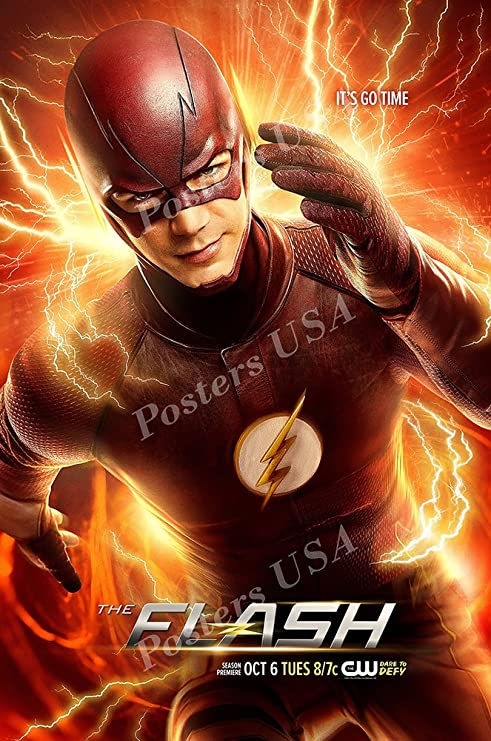
1991 / The flash Tv series
The Flash started in a TV series, but DC was hard pressed to catch industry leaders Marvel and Malibu
1992 / Batman: The Animated series
Batman: The animated series written by Paul Dini was released and won an Emmy for outstanding animated program
1995 / Batman Forever
Batman Forever was the top grossing film of 1995
1997 / Batman and Robin
Batman and Robin debuted
1998 / DC and Milestone Media
DC entered a publishing agreement with Milestone Media that gave DC a line of comics featuring culturally and racially diverse range of superhero characters. Milestone yielded popular animated series such as Static Shock
2003 / Elfquest
In March 2003 DC acquired publishing and merchandising rights to the long-running fantasy series Elfquest, previously self-published by creators Wendy and Richard Pini under their WaRP Graphics publication banner. This series then followed another non-DC title, Tower Comics' series T.H.U.N.D.E.R. Agents, in collection into DC Archive Editions.
2004 / DC temporarily acquired the North American publishing rights
DC temporarily acquired the North American publishing rights to graphic novels from European publishers 2000 AD and Humanoids. It also rebranded its younger-audience titles with the mascot Johnny DC and established the CMX imprint to reprint translated manga.
2005/ all-Star
DC launched its "All-Star" line (evoking the title of the 1940s publication), designed to feature some of the company's best-known characters in stories that eschewed the long and convoluted continuity of the DC Universe. The line began with All-Star Batman & Robin the Boy Wonder and All-Star Superman, with All-Star Wonder Woman and All-Star Batgirl announced in 2006 but neither being released nor scheduled as of the end of 2009.
2005/ a new logo (dubbed the "dc spin")
a new logo was unveiled, debuting on DC titles in June 2005 with DC Special: The Return of Donna Troy #1 and the rest of the titles the following week. In addition to comics, it was designed for DC properties in other media, which was used for movies since Batman Begins, with Superman Returns showing the logo's normal variant, and the TV series Smallville, the animated series Justice League Unlimited and others, as well as for collectibles and other merchandise. The logo was designed by Josh Beatman of Brainchild Studios
2005/ batman begins film was released
the critically lauded Batman Begins film was released; also, the company published several limited series establishing increasingly escalated conflicts among DC's heroes, with events climaxing in the Infinite Crisis limited series.
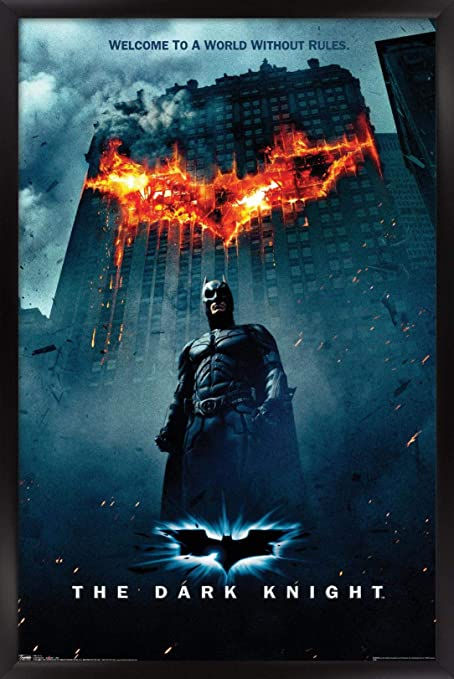
2008/ The Dark Knight
The Dark Knight was released, and remains to this day one of the highest-ranking films
2009/ Warner Bros. announced that DC Comics would become a subsidiary of DC Entertainment, Inc.
Warner Bros. announced that DC Comics would become a subsidiary of DC Entertainment, Inc., with Diane Nelson, President of Warner Premiere, becoming president of the newly formed holding company and DC Comics President and Publisher Paul Levitz moving to the position of Contributing Editor and Overall Consultant there. Warner Bros. have owned DC Comics since 1967.
2010/ DC Entertainment named Jim Lee and Dan DiDio as Co-Publishers of DC Comics
DC Entertainment named Jim Lee and Dan DiDio as Co-Publishers of DC Comics, Geoff Johns as Chief Creative Officer, John Rood as EVP (Executive Vice President) of Sales, Marketing and Business Development, and Patrick Caldon as EVP of Finance and Administration.
2010/ anonymous buyer
On February 22, 2010, a copy of Action Comics #1 (June 1938) sold at an auction from an anonymous seller to an anonymous buyer for $1 million, besting the $317,000 record for a comic book set by a different copy, in lesser condition, the previous year.
2011/ DC reboot
DC rebooted all of its running titles following the Flashpoint storyline. The reboot called The New 52 gave new origin stories and costume designs to many of DC's characters.
2011/ DC relaunches its comic line
DC announced that it would end all ongoing series set in the DC Universe in August and relaunch its comic line with 52 issues #1s, starting with Justice League on August 31 (written by Geoff Johns and drawn by Jim Lee).
2011/ DC announces digital release
DC announced it would begin releasing digital versions of their comics on the same day as paper versions.
2012/ DC unveiled a new logo
DC unveiled a new logo consisting of the letter "D" flipping back to reveal the letter "C" and "DC ENTERTAINMENT". The Dark Knight Rises was the first film to use the new logo, while the TV series Arrow was the first series to feature the new logo.
2013/ DC unveiled two new digital comic innovations
DC unveiled two new digital comic innovations to enhance interactivity: DC2 and DC2 Multiverse. DC2 layers dynamic artwork onto digital comic panels, adding a new level of dimension to digital storytelling, while DC2 Multiverse allows readers to determine a specific story outcome by selecting individual characters, storylines and plot developments while reading the comic, meaning one digital comic has multiple outcomes. DC2 will first appear in the upcoming digital-first title, Batman '66, based on the 1960s television series and DC2 Multiverse will first appear in Batman: Arkham Origins, a digital-first title based on the video game of the same name.
2013/ DC Entertainment moves
DC Entertainment announced that the DC Comics offices would be moved from New York City to Warner Bros. Burbank, California, headquarters in 2015.
2013/ Man of Steel
Zack Snyder's man of steel earned more than $600 million and served as the foundation for the Dc Extended universe (DCEU)
2015/ DC Super Hero Girls universe
DC Entertainment announced its first franchise, the DC Super Hero Girls universe, in April 2015 with multi-platform content, toys and apparel to start appearing in 2016.
2016/ DC announced a line-wide relaunch titled DC Rebirth
DC announced a line-wide relaunch titled DC Rebirth. The new line would launch with an 80-page one-shot titled DC Universe: Rebirth, written by Geoff Johns, with art from Gary Frank, Ethan Van Sciver, and more. After that, many new series would launch with a twice-monthly release schedule and new creative teams for nearly every title. The relaunch was meant to bring back the legacy and heart many felt had been missing from DC characters since the launch of the New 52. Rebirth brought huge success, both financially and critically.
2016/ The new logo
DC Entertainment announced a new identity and logo for another iconic DC Comics universe brand on May 17, 2016. The new logo was first used on May 25, 2016, in conjunction with the release of DC Universe: Rebirth Special #1 by Geoff Johns.
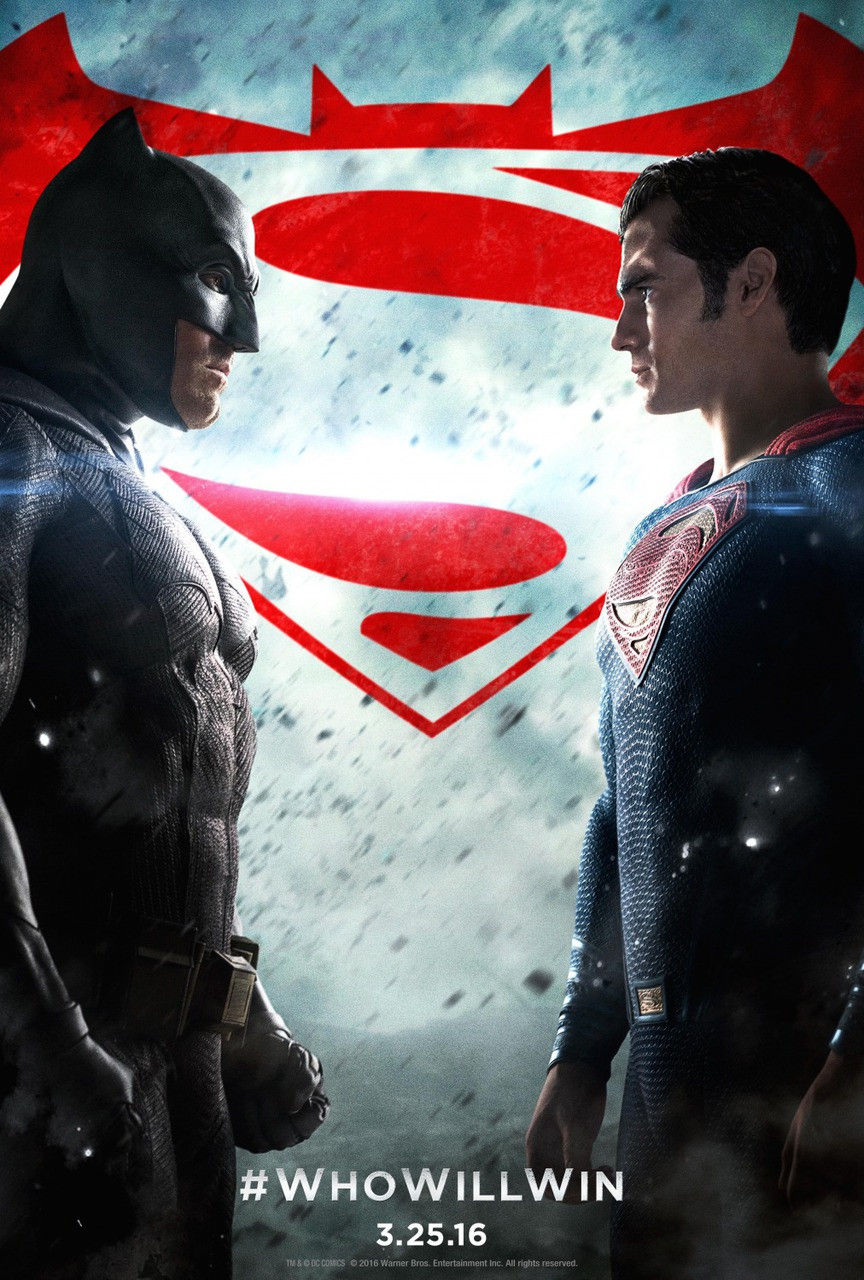
2016/ Superman: Dawn of Justice
Superman Dawn of Justice was released
2017/ Wonder woman
DC released Wonder Woman which was the first female led superhero created
2018/ DC Universe is a video on demand service operated by DC Entertainment
DC Universe is a video on demand service operated by DC Entertainment. DC Universe is expected to offer more than video content through the inclusion of an immersive experience with fan interaction that encompasses comics in addition to television.
2019/ Watchmen
Damon Lindelof’s stand alone HBO mini-series Watchmen 2019 was a critical smash and it won nearly a dozen Emmy Awards
2010/ dan dido leaves dc
the Co-Publisher of DC Comics, Dan DiDio stepped down after 10 years at that position.
2021/ DC relaunch
DC relaunched their entire line once again under the banner of Infinite Frontier. After the events of the Dark Nights: Death Metal storyline, the DC Multiverse was expanded into a larger "Omniverse" where everything is canon, effectively reversing the changes The New 52 introduced a decade prior.